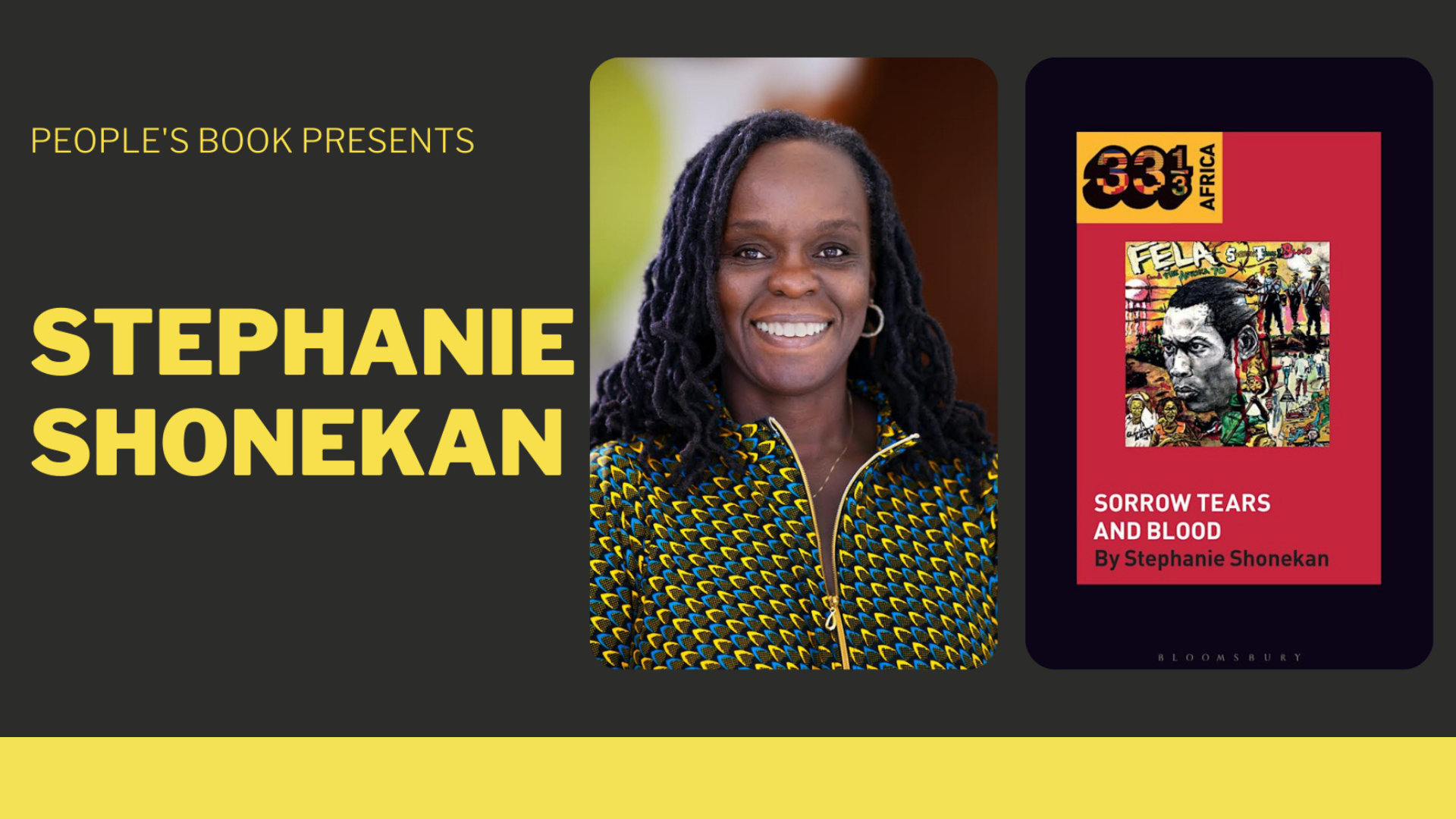
Listening in on Lessons from 'We Are the World'
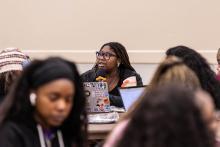
Dean Shonekan teaches an ARHU course on arts and humanities of a single song.
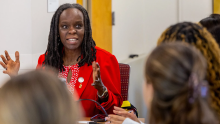
Sherrilyn Ifill argued the 14th Amendment provides a template to reimagine democracy.
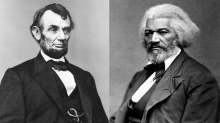
A new book by a UMD alumnus recounts famed abolitionist Frederick Douglass' journey from criticism to respect of Abraham Lincoln for the 16th president's moves to end slavery.
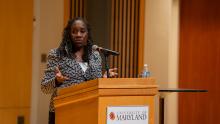
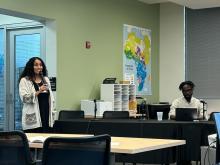
Kwame Edwin Otu of Georgetown University gave a keynote address about the global politics of e-waste at UMD's ATLAS Conference.
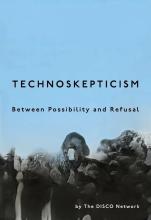
Technoskepticism: Between Possibility and Refusal was published in February 2025, and features scholarship by COMM Associate Professor and Black Communication and Technology (BCaT) Lab Director Dr. Catherine Knight Steele, and COMM Assistant Professor and Associate Director of the BCaT Lab Dr. Rianna Walcott.
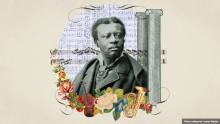
The opera "Morgiane, or the Sultan of Ispahan", composed in 1887 by Edmond Dédé, premiers 130 years later.
Thursday, November 13, 2025 4:30 pm - 6:00 pm
Jimenez Hall, 1205
Lecture Title: Childish Bodies: From Invisible Traffick to Visible Debt
Summary: This 30-minute lecture explores the trafficking of Black children into the U.S. South after the Haitian Revolution, raising the question: How could the world’s first Black republic, founded in freedom, see its children sold abroad? Placing Haiti within the framework of “second slavery,” I extend Dale Tomich’s insights on the plantation and global capitalism to the Haitian case. Within a year of independence, French forces in Santo Domingo trafficked free-born Haitian children to the Carolinas in exchange for rice, aided by U.S. neutrality and British blockades. Drawing on Haitian laws, newspapers, runaway ads, and military reports, I argue that Haiti’s struggle against slavery did not end in 1804 but continued into its first decade of independence.
Please join us for a Local Americanists during which Professor Tess Chakkalakal will discuss her recently published book, A Matter of Complexion: The Life & Fictions of Charles W. Chesnutt (St. Martin's Press, 2025).

Monday, November 3, 2025 5:30 pm - 7:00 pm
The Clarice Smith Performing Arts Center, Gildenhorn Recital Hall
Sherrilyn Ifill, professor of law and founding director of the 14th Amendment Center for Law and Democracy at Howard University, will deliver a Douglass Center for Leadership Through the Humanities public lecture on the 14th Amendment and the Crises in American Democracy. Professor Ifill's decades-long leadership in centering humanity in the law, combined with UMD’s selection of the Constitution as our First Year Book and the current and ongoing attacks on due process and birthright citizenship makes this an important moment to hear her analysis on this amendment, considered one of the most consequential.
Passed during Reconstruction, the 14th Amendment not only set out to protect the citizenship and rights of formerly enslaved Black people, but it also issued safeguards disqualifying former insurrectionists from running for state and federal office. Professor Ifill will offer analysis on the 14th Amendment in contemporary life and politics with a central focus on the human condition in law and democracy.
Act Like You Know is a podcast preview and talk-back event that centers the technical and professional communication value of Black cultural and rhetorical practices. Featuring Dapper Dan Midas (aka DDm), who hosts the Secretary of Shade YouTube channel, the event will screen excerpts from the first episode of the Act Like You Know podcast, followed by a talk-back style panel discussion. Together, we’ll explore the use of Black and queer cultural knowledge and language practices to communicate and translate complex social and political commentary. The event’s goal is to spark a dialogue about language, expertise, and ethos among folks within and outside the academy and to prompt us all to consider the cultural, rhetorical, and linguistic skills that Black (and other marginalized) writers and communicators bring to the task of making complex and specialized knowledge more legible, accessible, and ultimately more useful.
October 24, 2024 Tawes Hall, Room 1121 Ulrich Recital Hall 5-7pm, followed by a light reception
Hosted by the Frederick Douglass Center for Leadership through the Humanities