

Harmonies of Liberty: A Conversation with Tatyana Fazlalideh
 Each year, on March 10, Harriet Tubman Day, we in The Harriet Tubman Department of Women, Gender and Sexuality Studies sound the call to gather. This year, our theme, “Harmonies of Liberty,” draws from James Weldon Johnson’s “Lift Every Voice and Sing.”
Lift every voice and sing,
Till earth and heaven ring,
Ring with harmonies of liberty
To sing no further is to be schooled in a lesson on the importance of joy, community, and care, in the meantime and in-between time—joy as a catalyst for and companion to freedom. To call us together under the idea of “harmonies of liberty” is not an invocation to think the same thing or sing the same note. Time taken to commemorate Harriet Tubman is time spent re-envisioning communities and pathways to justice. We metaphorically draw on Black musical traditions that come alive on the downbeat, subvert the expected meter, and deliberately improvise in order to learn and teach each other how to walk out of time with the world (hostilities) around us. We come together to improvise the solutions we need and find new ways of imagining ourselves.
This year, we think about alternative pathways to justice in conversation with Brooklyn-based artist Tatyana Fazlalizadeh. Fazlalizadeh combines visual art and activism as an entry point to consider “how people, particularly women, queer folks, and Black and brown people, experience race and gender within their surrounding environments -- from the sidewalk to retail stores, to the church, to the workplace.” In 2012, Tatyana Fazlalizadeh started her ongoing international series, "Stop Telling Women to Smile." This project serves as a response to street harassment. It consists of a collection of large-scale portraits aiming to reclaim the spaces women and non-binary individuals experience as hostile and unsafe. While the project initially focused on the experiences of harassment that women and non-binary individuals face in the USA, Fazlalizadeh's work has now expanded to other countries, such as Berlin, Canada, France, Mexico, and Trinidad and Tobago, where she collaborates with local communities to rewrite spaces of harm. Fazlalizadeh’s work travels multiple terrains – including the African American Museum of History and Culture, serving as the Public Artist in Residence for the New York City Commission on Human Rights, as well as her artistic collaboration with Spike Lee on his Netflix Series, “She’s Gotta Have It.”
We will be joined by Ms. Ernestine “Tina” Wyatt, who will open the evening’s proceedings by bringing remarks on behalf of the Tubman family. This event begins at 3:00 p.m. in the Edward St. John Teaching and Learning Center, The University of Maryland, College Park, Room 1309, and online. In-person and online registration required. While at UMD, Fazlalizadeh will hold a workshop for student artists and activists, followed by her keynote.
Notes:
Also known as “The Black National Anthem,” the poem/song was written at the turn of the twentieth century (1900) and scored by Weldon Johnson’s brother, John Rosamond Johnson.
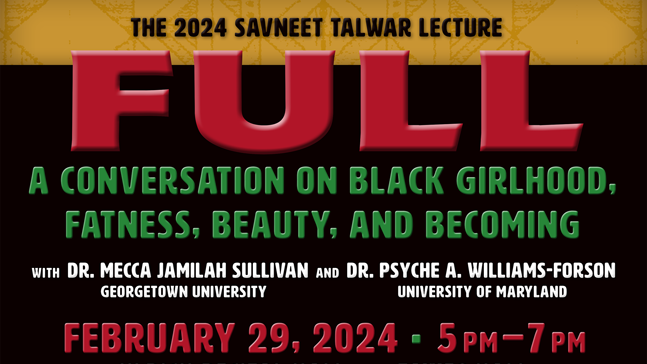 The Department of American Studies at the University of Maryland, College Park is delighted to announce the 2024 Savneet Talwar Lecture, "FULL: A Conversation on Black Girlhood, Fatness, Beauty and Becoming" featuring Dr. Mecca Jamilah Sullivan of Georgetown University and Dr. Psyche Williams-Forson of the University of Maryland.
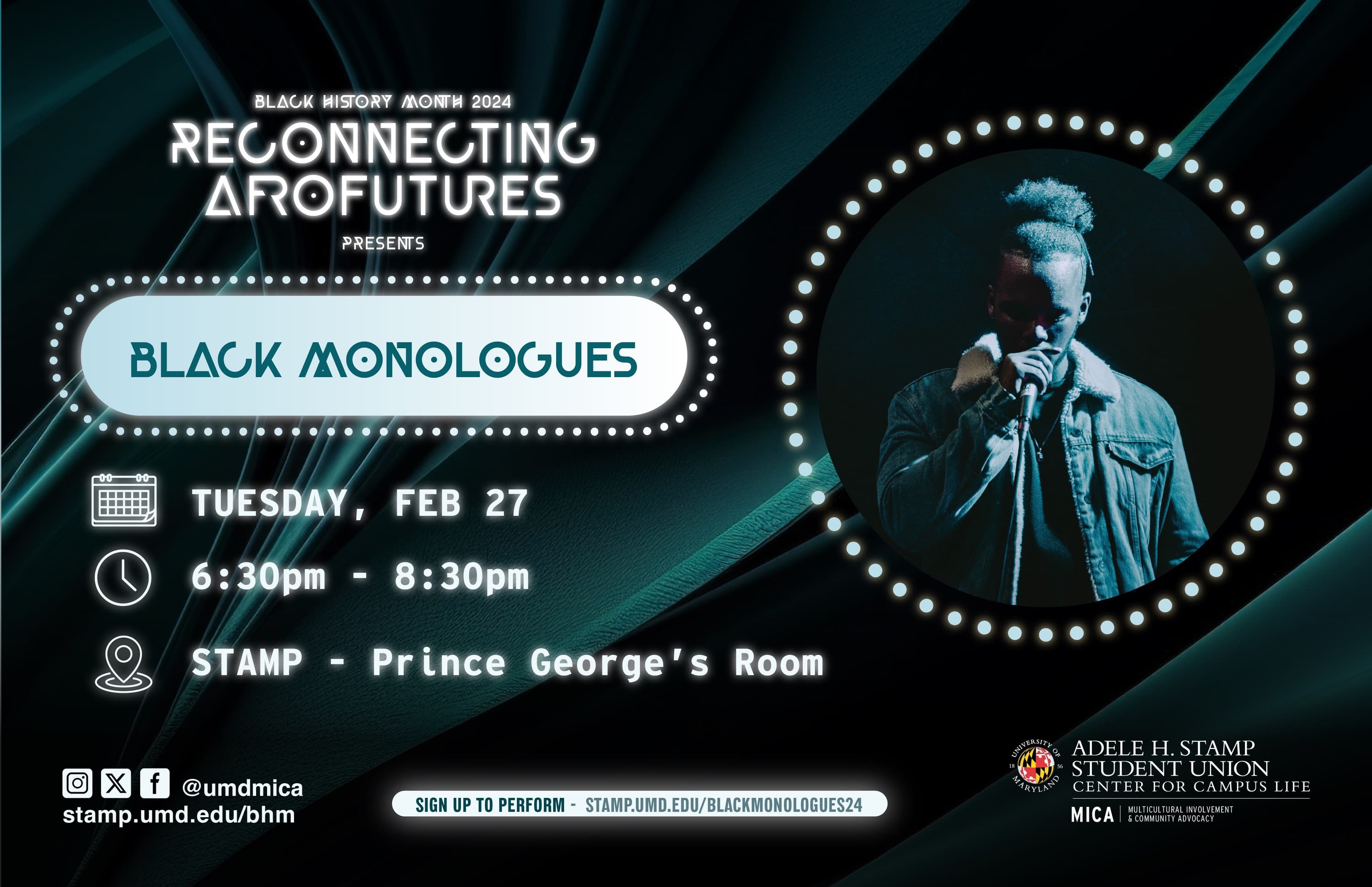 The Black Monologues are designed to give students, staff and faculty an opportunity to share their stories through the performance of spoken word poetry, monologues and poetry reading. The program will give audience members an opportunity to enjoy a night of poetry, community, food and relaxation while also stimulating important dialogue surrounding identity and the Black experience.
 Eziaku Nwokocha is Assistant Professor of Religious Studies at the University of Miami. She is a scholar of Africana religions with expertise in the ethnographic study of Vodou in Haiti and the Haitian diaspora. Her research is grounded in gender and sexuality studies, visual and material culture and Africana Studies. She obtained a Ph.D. with distinction in Africana studies from the University of Pennsylvania, a Master’s degree in Africana studies from the University of Pennsylvania, a Master’s degree in Theological studies from Harvard Divinity School, and a Bachelor’s degree in Black studies and Feminist studies from the University of California, Santa Barbara. Nwokocha is the author of Vodou en Vogue: Fashioning Black Divinities in Haiti and the United States (University of North Carolina Press, 2023), an ethnographic study of fashion, spirit possession, and gender and sexuality in contemporary Haitian Vodou, exploring Black religious communities through their innovative ceremonial practices. The book is featured within the series Where Religion Lives.
 The Frederick Douglass Center for Leadership Through the Humanities and the Department of African American and Africana Studies present a special screening of Lowndes County and the Road to Black Power, a documentary that tells the story of the local movement and young Student Nonviolent Coordinating Committee (SNCC) organizers who fought not just for voting rights, but for Black Power, in Lowndes County, Alabama, a rural, impoverished town with a vicious history of racist terrorism.
 In collaboration with SEE, MICA will host a free screening of Jordan Peele's scifi horror film Nope.
 Bias Incident Support Services (BISS) and the Nyumburu Cultural Center have partnered to facilitate a restorative circle to honor Black ancestors and current students to build a beautiful Black future. The Circle is a monthly space to ground ourselves in the lived experiences of those impacted by identity-based trauma. All UMD members are welcome to join, acknowledging that we are holding space with vulnerability and humility. Restorative circles derive from Indigenous ancestral wisdom as a means for individual and community healing.
 In collaboration with SEE, MICA will be screening the movie The Color Purple in the STAMP Student Union's Hoff Theater at 6:00PM
 Join UMD Libraries for our annual Black History Month Read-a-thon. Readers from across the libraries will gather in McKeldin's Special Events room to share excerpts from books that center Black voices, experiences and imagination.
 Douglass Day is an international celebration honoring the life and work of Frederick Douglass and Black History Month, and takes place annually on Douglass' chosen birthday—February 14th. We welcome anyone with an interest in Black history, joy, art, foodways, etc. to join us to transcribe digitized images from Douglass' “General Correspondence, 1841-1912” held at the Library of Congress in DC. The correspondence includes letters from and about Douglass to family members, activists, politicians, and organizations before and after his death in 1895.
 Join the University Career Center as we host a panel of Black Terp alumni. Panelists will share updates on their various career paths, provide advice to current students, and discuss the experience of being a recent graduate. Attendees will also have the opportunity to ask questions.
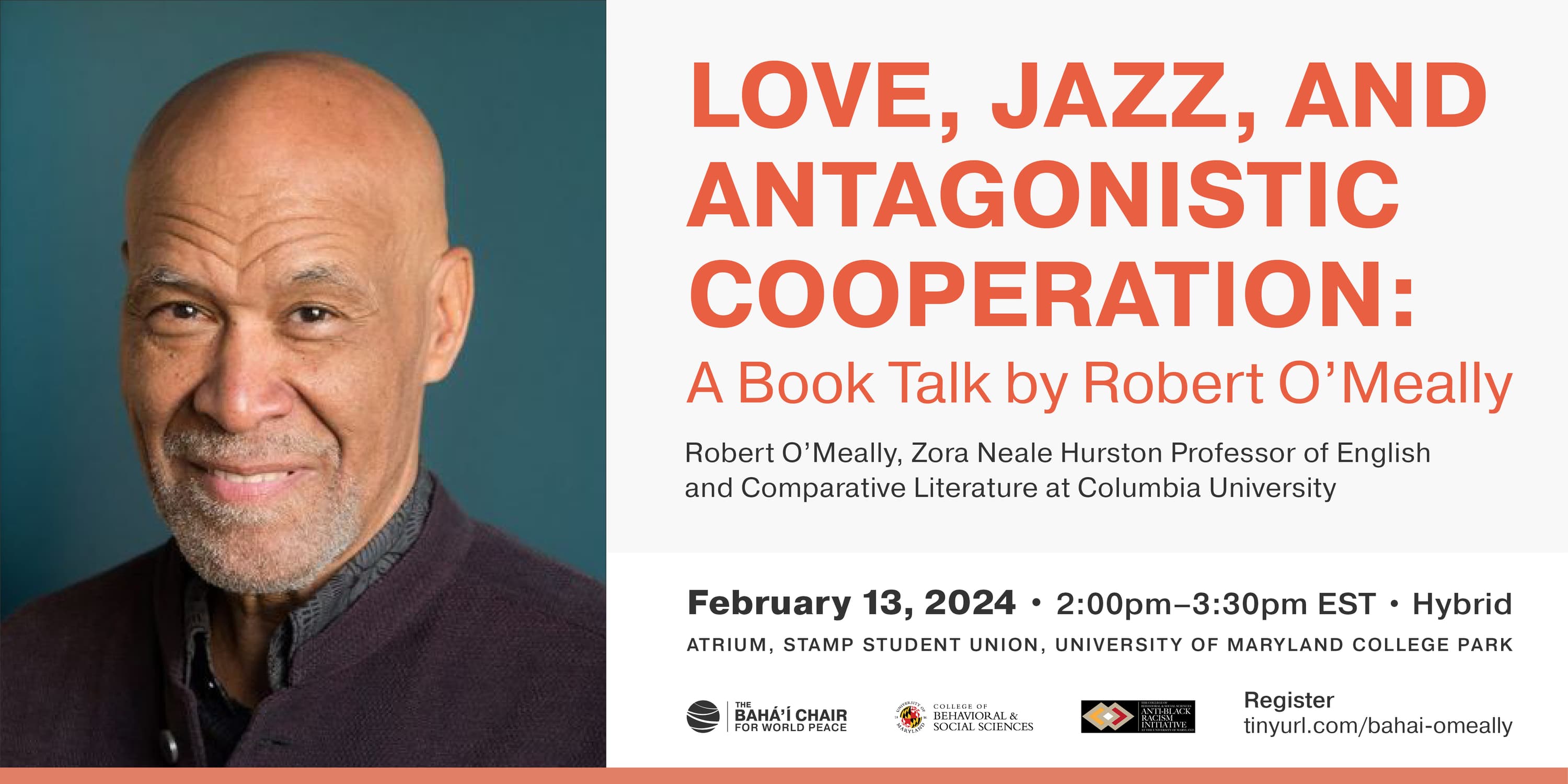 Ralph Ellison famously characterized ensemble jazz improvisation as “antagonistic cooperation.” Both collaborative and competitive, musicians play with and against one another to create art and community. In Antagonistic Cooperation, Robert G. O’Meally shows how this idea runs throughout twentieth-century African American culture to provide a new history of Black creativity and aesthetics.
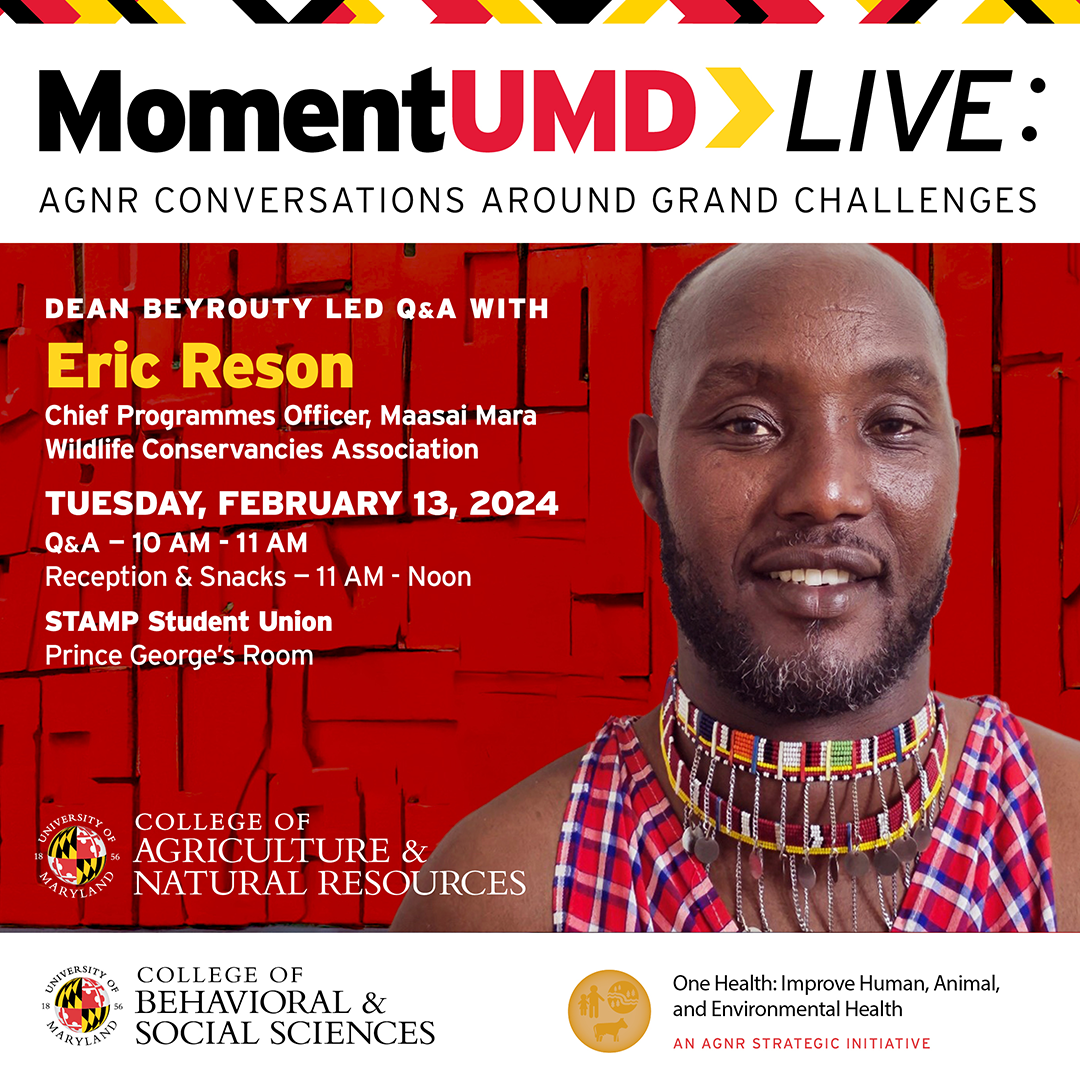 AGNR is pleased to announce the next installment of MomentUMD Live: AGNR Conversations Around Grand Challenges, featuring Eric Reson, Chief Programmes Officer with the Maasai Mara Wildlife Conservancies Association.
 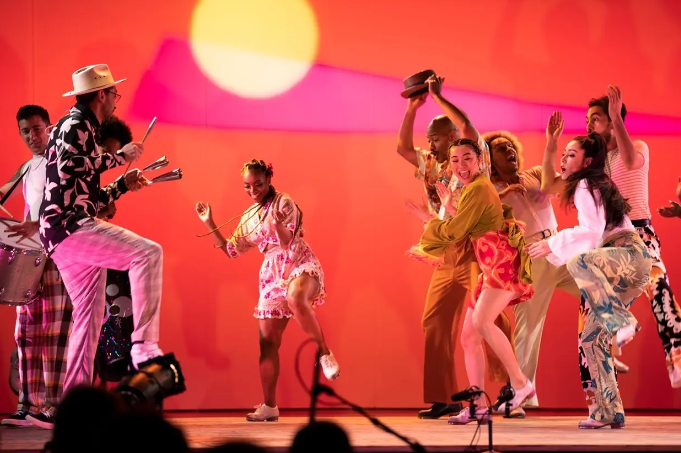 A tap dance and live music company that blurs the line between concert dance and music performance, Music From The Sole celebrates tap's roots in the African diaspora, particularly its connections to Afro-Brazilian dance and music and its lineage to forms like house dance and passinho (Brazilian funk). The New Yorker notes that the group’s “dancers, whose bodies also provide percussion, are in a constant give-and-take with musicians on piano, sax and bass. The feeling is that of being at a family reunion, in which every family member has something to say.”
 Just go away – and study abroad!